Be yourself; Everyone else is already taken.
— Oscar Wilde.
This is the first post on my new blog. I’m just getting this new blog going, so stay tuned for more. Subscribe below to get notified when I post new updates.
Be yourself; Everyone else is already taken.
— Oscar Wilde.
This is the first post on my new blog. I’m just getting this new blog going, so stay tuned for more. Subscribe below to get notified when I post new updates.
The essence of the Internet is interaction, linking, and networking. The most essential attribute is the connection. Portals connect people and content, social media connects people, social media platforms like Weibo, Facebook, Twitter, etc. While connecting people, people and content, content and content. These social media is the most exciting place to present the information that needs to be pushed and suggested in the simplest and most “micro” way; so you don’t have to read the full article, to achieve efficient connection and the best content aggregation.
Technology has changed the way people connect and communicate, and it has changed the way people participate in environmental protection, and social media has become a more important and efficient communication platform for environmental action.
On twitter: there is a user’s name is environment Guru, a short introduction is an intelligence tools to find news, events and twitters hashtag with water, wastewater, sustainable development and green building, etc. There are 1.31 millions tweets on that platform. Professor Anas Ghadouani also did post on that, and the reading number is pretty awesome. Some tweets had been shared more than thousands times(Twitter.com)
China mobile payment is also associated with environmental protection and water protection. So, how mobile payment is connected with environment protection?. Alipay is a payment brand owned by Alibaba. One of the apps in Alipay called the “ant forest”, and users involved in the ant forest improve the environment of the earth but how?
For example, Ant Forest encourages users to choose a green lifestyle. For example, if you get green energy (collect through the app) walking donation (compared to a car), you can also get green energy when you pay online (save carbon and human resource, save energy).
On September 4th, the “ant forest” was launched on the “protection site”. The user’s green energy can be used to plant. These vegetations in the desert areas of the northwest are conducive to maintaining water and soil and can reduce local water resources. Evaporation; and planting trees can reduce soil and air temperatures; this will reduce the evaporation of water resources and make vegetation and the environment grow better. In addition to planting trees, you can “adopt” five square meters of “protected land”, protect trees, protect animals, protect forest ecosystems, and change postures to guard green hills. (Zhou, 2019) people talk about protecting the planet and saving the environment, many people’s first reaction is to “plant trees.” Even many people think that this is the only way. Actually, planting trees can protect the environment, and there are many other ways. The establishment of nature reserves is also one of the most important methods.
Forest ecosystems
are rich and varied. A natural forest, a variety of trees and a variety of wild
animals living in the forest are the treasure of the earth. In additional, the
forest has other ecological values, purifying water sources, and fixing water
and soil to the ground. This is the relationship between human and forest
sustainable development. The ant forest system will use the energy collected by
people through greening actions to protect this ecosystem.
How does Alibaba protect the “protected land”? To protect the
“protected land”, there is a whole set job Alibaba will do for your
protected land. Generally speaking, Alibaba had done following:
1. Establish a strict management system for the protection and access of
protected areas;
2. Establish a strict field patrol system;
3. Ecological monitoring and species protection for water sources;
4. Carry out community development work including: if water resources are
protected, the way of wastewater treatment is promoted, and the protection of
water resources is emphasized.
This piece of protection is close to the west of Huangshan Scenic Area, and the
ecological location is important. As an important forest hinterland in the
Huangshan area, it plays an important role in water conservation, purification
of water quality and biodiversity conservation. The number of users of Alipay
ant forest reached 500 million, and the planting tree reached 100 million
trees, with a total area of 1.4 million acres of protected land. This is
visible to the protection of water resources and the environment, and in this
process, every user has to protect the water resources and the environment, so
when using water resources and treating wastewater, people will have more Good
resource conservation awareness, which provides undoubtedly a great help to our
wastewater treatment and water use; it is an activity that is sustainable and
gradually improves the quality of the people
Reference:
Twitter.com. (2019). Search Twitter – #wastewater. [online] Available at: https://twitter.com/hashtag/wastewater?src=hash&lang=en [Accessed 13 Sep. 2019].
Zhou, c. (2019). How Alipay Users Planted 100M Trees in China | Alizila.com. [online] Alizila.com. Available at: https://www.alizila.com/how-alipay-users-planted-100m-trees-in-china/ [Accessed 13 Sep. 2019].
M.nbdpress.com. (2019). Weibo, UNDP partner to promote sustainable development. [online] Available at: http://m.nbdpress.com/articles/2017-01-17/978.html [Accessed 13 Sep. 2019].
En.wikipedia.org. (2019). Instagram. [online] Available at: https://en.wikipedia.org/wiki/Instagram [Accessed 13 Sep. 2019].
In past blogs, we have introduced a lot of questions about the possible problems of wastewater and the treatment of wastewater. Today is my third blog, there are a lot of things that will make you excited:
With the large population of the world’s population, if the volume of usable water remains the same (obvious it’s not), this will obviously lead to the lack of clean water for humans, animals and plants. The situation is already serious. If the whole world, a country or a region does not have a reasonable water resource, the crisis will obviously become more terrible. (More wastewater problems had been identified in the past blog)
So, what can we do to protect the water and use them in a better way? Even if we have a solution. But how can we implement with it? How can we make people, industries, etc. use water effectively? Reduce consumption? Want to treat wastewater to a healthy and consumable level? So, this blog is about telling everyone about the relationship between regulatory framework and wastewater engineering.
Regulatory framework? To be honest I have no idea what is it before I do this vlog; A law? A standard to follow. A guide? Or may it be a constraint from social morality? There are many things that can be included in the regulatory framework, summarizing it in one sentence: “There is the necessary infrastructure to support the control, guidance or implementation of proposed or adopted actions, rules, principles or laws”.
In wastewater treatment, this may include a range of regulations such as emission standards, fines and incentives, wastewater facility design standards, minimization of wastewater use, social awareness and ethical regulatory awareness, and education on wastewater and water use. (Goc.net.au, 2019)
Effectively managing wastewater and making a complete set of usable frameworks is a daunting task. If the framework design is unreasonable, specific laws and policies will not be able to implement successfully, which will make the use of water resources worse. If the framework design fails to meet the expected requirements, water resources will be wasted or the treatment of wastewater can’t reach healthy point, so a reasonable supervision of framework will make water more reasonable. It may not be a concern to normal citizens, it’s hard to ask them to understand the full content and follow the rules. However, enforcement of laws, enforcement of emission standards and fines for violations had worked successful in the past years, or moral condemnation may be also an important role. Education and ethics of people who in developed countries may naturally meet the needs of the regulatory framework. However, in some developing countries, people’s understanding of wastewater discharge and treatment cannot meet the regulatory framework. Even if their understanding reaches a certain level, they will throw them away for the sake of profit, such as:
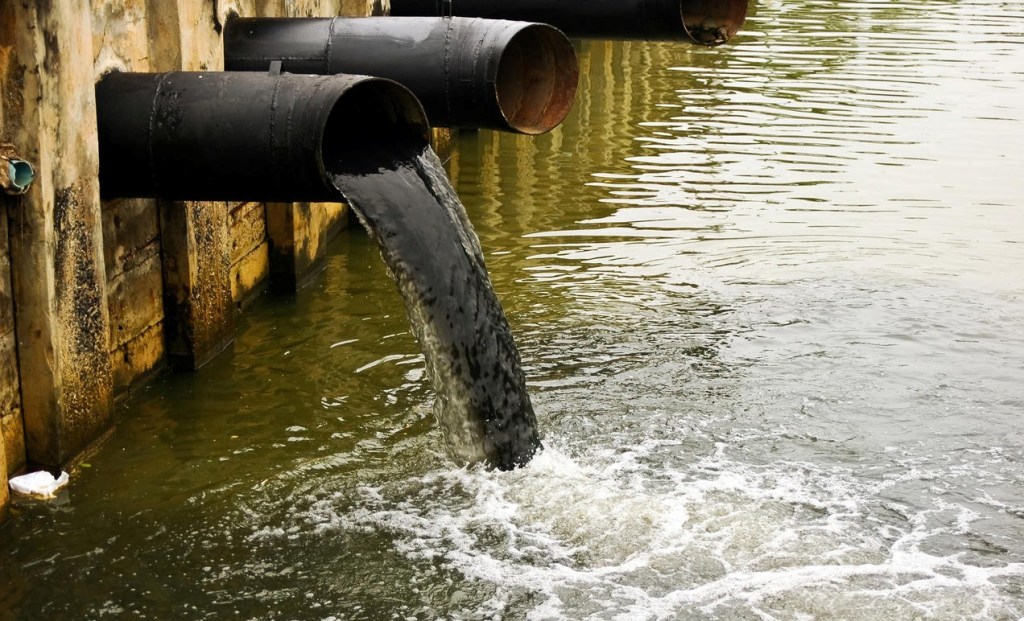
So in this case a complete regulatory framework and implemented with “powerful control” is particularly important. There are some basic elements that required to create a comprehensive wastewater regulatory framework. These include:
Legislation and supporting regulations
Reasonable standards and emission limitation
Guidelines and practices for wastewater treatment
One or more implementation and regulatory institution.
Regulatory conditions established based on actual conditions, rather than copying regulatory conditions in other regions, because the needs of each region and country are different, and regulatory framework should be improved as regional conditions improve. (Pubs.acs.org, 2019)
These frameworks are usually implemented by regulatory institutions. These institutions usually develop and coordinate policies, plans and standards related to the water and wastewater sector; and supervise and monitor water/wastewater treatment facilities. These regulators issue regulations into small groups (companies and personals).
As an independent citizen of the world, in fact, the management framework of water resources can exist for everyone, just like the plan we made for our own career, we can also make a self-frame for water resources. We all have a responsibility to contribute to effective water use.
I think it’s very important to apply the framework to water consumers. If we limit source consumption and pollution, it will be easier to achieve higher wastewater standards through wastewater treatment facilities. Therefore, if it can be used in homes and factories, and also has certain water quality standards, these standards can come from household and industrial sites as well as hospital and agricultural sources. These may result in reduced pollutants on site. A comprehensive ban on toxic pollutants such as herbicides and micro plastics should be strengthened. These measures can help us take a step towards achieving higher water quality. So what benefits does a successful and reasonable management framework bring to us? It can make conducive to the treatment of wastewater and it will save more energy, reduce cost of wastewater treatment; contribute to sustainable development goals.
Wait.
Just giving a regulatory framework is not enough. This framework needs to evolve as the times progress and needs to be implemented and regulated reasonably and effectively. If management fails to achieve the desired results, a timely improvement framework should be implemented. That is what we call Sustainable development, the framework is not only last for one or two month, it should be able to improve and renewable, give us a sustainable structure to hold the wastewater treatment process last for more time, funding, human resource and education must be include and have a plan to make it last for a long time.
As conclude, the regulatory framework is the foundation of wastewater engineering; without regulatory framework, the existing of wastewater engineering is meanness.wastewater engineering is like a gun, the shooter is the regulatory frameworks.
Reference:
Goc.net.au. (2019). Guidera O’Connor | Water Engineering – Water treatment framework. [online] Available at: https://goc.net.au/featured-projects/water-treatment-framework [Accessed 13 Sep. 2019].
Pubs.acs.org. (2019). A Changing Framework for Urban Water Systems. [online] Available at: https://pubs.acs.org/doi/10.1021/es4007096 [Accessed 13 Sep. 2019].
Sewage refers to the wastewater discharge by people in daily life activities. This kind of wastewater is mainly polluted by waste and human excrement. The quantity, composition and concentration of pollutants are related to people’s living habits and water consumption. Domestic sewage generally does not contain toxic substances, but it has conditions suitable for microbial reproduction. It contains a large number of bacteria and pathogens, and is harmful to a hygienic point of view. The physical processing of wastewater is to separating and recovering undissolved suspended state pollutants (including oil film and oil beads) in the wastewater by physical action can be classified into gravity separation method, centrifugal separation method, and sieve filtration retention method. The processing unit belonging to the gravity separation has sedimentation floating (air floatation), etc. And the corresponding processing equipment’s are grit chambers, sedimentation tanks, grease traps, air floatation tanks and their attachments. The centrifugal separation method itself is a treatment unit and the treatment devices used are a centrifugal separator and a water separator. The screening and retention method has two processing units: grid screening and filtration. The former uses a processing device for the grid and the screen, while the latter uses a sand filter and a microfilter. The processing method based on the principle of heat exchange also belongs to the physical processing method, and the processing unit has evaporation crystallization. There is chemical treatment as well, it separates and removes waste water from dissolved or colloidal conditions in wastewater or convert it into harmless substances. In the chemical treatment method, the processing units based on the chemical reaction generated by the dosing agent are: coagulation, neutralization, redox, etc. And the mass transfer-based treatment units are: extraction, stripping, adsorption, ion exchange, electrodialysis and reverse osmosis. The latter two processing units are also collectively referred to as membrane separation techniques. The processing unit using mas transfer has both chemical and physical effects, so it can be separated from chemical treatment method and become another physical method.
Nowadays, the wastewater treatment infrastructure has got many problems. The first one is that the facilities are getting aging. There are many equipment that have no time for maintenance and care, and some machines have reached the end of retirement age like cars, but government keep continue to use them because of insufficient funds. It will also lead to consequence that wastewater after treated can’t meet the standards. Some wastewater treatment equipment consumes a lot of energy, which will cost the government a lot of money. We need to build a recycling station that can recycle the energy or resources after treatment, which meets goals with the SDG, sustainable development and reuse of energy. Also, a large number of settled populations match with the certain limited wastewater treatment plants. There are travellers and accommodates and more foreign populations. Those people would required more wastewater treatment plants. The wastewater system will become unbalanced so it won’t work sufficiently.
Lack of unified planning and poor comprehensive coordination ability will cause a significant affect in the water treatment efficiency of urban infrastructure. Due to the lack management and connection between different blocks(area), it is difficult to quickly adjust and effectively connect the infrastructure such as water supply and drainage, energy resourse and transportation between them. The development of wastewater treatment has slowed down and the comprehensive benefits have not been fully utilized.
Another problem that we are facing is the wastewater after recycled by using physical or chemical method, is not able to recycle into a good quality water that people can’t drink. The recycled water is discharged into river. We should find a way the recycled water can be used for commercial. So that we can make recycled water as the second water resources. the processing treatment method should be improved as well so that we can get healthier water resources.
Solution: Lift the maintenance water treatment machine and replace the parts regularly. Just like a car, you have to send it to 4s store to maintain maximum performance. Use more funds to improve technology and achieve energy savings to achieve long-term profit and environmental protection. The key to the improve wastewater treatment technology is to train or solicit professional wastewater engineers. The wastewater treatment technology is constantly being updated every day, especially base on the rapid development of information technology, and the renewal of wastewater treatment technology must keep up in progress all times. Another important point is that government leaders should pay attention to the protection of the ecological environment and set up the rules or policy so that the recommended water management can continue.
Finally, there are still many problems in wastewater infrastructure; it will affect people’s drinking water, causing pollution to the environment, wasting energy and causing economic damage. In future, wastewater management is more and more important in urban infrasturcure.
#WW’s problem zone
Water resources is an indispensable resource keep human and other organism survival. Sustainable development of water resources (Clean Water and Sanitation) is closely related to the continued development of ecological environment. Many countries still have many water resources problems such as insufficient water resources and insufficient fund for treating wastewater. These unsolved water problem affect the social-economic development of the region and adversely affect the ecological environment of the region. Water-resource is limited we can’t generate water from nowhere, wastewater re-circulation (reuse) is significant. So, what is wastewater? Wastewater refers to the water that is after been used on daily life, commercial or industrial etc.
If it is still not clear enough, let me give you a few examples: The water after rinse and take away the dinner you had digested last night from the toilet, or the dishwasher or washing machine has just outflow into the pipeline after working process, or the industrial water that has just flowed out of the pipe. There is no specific answer. Wastewater is not WASTE, The 99.97 percent of the wastewater is water, and the remaining components include three main physical, chemical, and biological constituents; that’s how wastewater is characterized, most of the constituents are interrelated. In fact, when you are reading this blog and feel thirsty, drink some water. I’d tell you the water you just drink could be wastewater few days ago. Wastewater treatment system in Western Australia takes 450million liters of water from our home every day. This water passes through the 16693km long water pipe into the treatment system, after treatment wastewater can be reused, including drinking or industrial use. Therefore, wastewater learning is closely related to us, which is of great help to environmental protection.
The three characteristics of wastewater we mentioned in the previous section are mainly physical, chemical and biological constituents. In terms of physical constituents; wastewater includes many things such as color, turbidity, temperature and solids, and solid matter uses total solids (TS) as an indicator, including many common things such as what we flush down and soluble paper towels that we had last night. Chemical constituents include heavy metals dissolved in water such as mercury, arsenic, chromium etc. PH value is also one of chemical constituents, concluding that any chemicals dissolved in the water are all chemical constituents. Biological constituents include biologically harmful substances such as bacteria, viruses, and parasites included in wastewater.
Polluted water on the human body would cause many unfavorable problem and disease: 70%-80% of the human body is water, if one person long-term drinks poor quality water, as result in poor physical resistance naturally weakened, then the occurrence of all diseases is inevitable. Waste has been contaminated by heavy metals is Water contaminated by heavy metals is harmful to human health. Water and food contaminated with cadmium will cause kidney and bone disease after eating, and the intake of 20 mg of cadmium sulfate will cause death. Poisoning caused by lead would cause anemia, nervous disorder. Cyanide is also a highly toxic substance. When it enters the bloodstream, it binds to the pigment oxidase of the cell, causing the breathing to be interrupted, causing respiratory failure and suffocation. 80% of the world’s diseases are related to water. Typhoid fever, cholera, gastroenteritis, dysentery, and infectious liver disease are the five major diseases of human beings, all caused by the uncleanness of water. Acids, alkalis, oxidizing agents in wastewater, furthermore such as copper, cadmium, mercury, arsenic, organic poisons such as dichloromethane and ethylene glycol, can poison aquatic organisms and affect drinking water sources. When the organic matter in the sewage is decomposed by microorganisms, the dissolved oxygen in the water is consumed, affecting the life of aquatic organisms such as fish. After the dissolved oxygen in the water is exhausted, the organic matter is anaerobic decomposed to generate unpleasant gases such as hydrogen sulfide and mercaptan, and the water quality would be worse. This is also the possible impact of untreated wastewater on the environment.
Most typical example of wastewater treatment failure: Minamata disease 1956:
Wastewater contains mercury discharged from a nitrogen fertilizer company in Minamata Town, Kumamoto Prefecture, Japan; which is converted into methylmercury after being discharged into the natural water resource. As a result Mercury were enriched in seawater, seabed and fish and it flows through food chain and water chain. At that time, the first disease happened on cats who loved to eat fish. After intoxication, the cats went crazy and jumped into the sea to commit suicide. In a few years, the traces of cats in the Minamata area were gone. In 1956, patients with symptoms like those of cats appeared. Because the cause of the disease is unclear, it is named by the local place name. In 1991, there were 2,248 poisoned patients announced by the Japanese Environment Agency, 1004 died.
Let’s stick this issue with the new idea of 21 century “SDG”-sustainable development goals. Goal six clean water and sanitation. What can we do? Well, this horrible issue definitely could be avoid if they have a sufficient wastewater treatment or people have a GOOD education on wastewater. Why I say a good education level? Since we don’t except everyone be professional engineer or wastewater manager, if the citizen of the village have a basic knowledge of wastewater, this horrible issue wouldn’t happen, isn’t it? So education is so important, even start from kids, let everyone know and learn basic knowledge of wastewater. So in long term of development, everyone knows how to deal with wastewater which match idea with “SDG”.
#get wastED#
This is an example post, originally published as part of Blogging University. Enroll in one of our ten programs, and start your blog right.
You’re going to publish a post today. Don’t worry about how your blog looks. Don’t worry if you haven’t given it a name yet, or you’re feeling overwhelmed. Just click the “New Post” button, and tell us why you’re here.
Why do this?
The post can be short or long, a personal intro to your life or a bloggy mission statement, a manifesto for the future or a simple outline of your the types of things you hope to publish.
To help you get started, here are a few questions:
You’re not locked into any of this; one of the wonderful things about blogs is how they constantly evolve as we learn, grow, and interact with one another — but it’s good to know where and why you started, and articulating your goals may just give you a few other post ideas.
Can’t think how to get started? Just write the first thing that pops into your head. Anne Lamott, author of a book on writing we love, says that you need to give yourself permission to write a “crappy first draft”. Anne makes a great point — just start writing, and worry about editing it later.
When you’re ready to publish, give your post three to five tags that describe your blog’s focus — writing, photography, fiction, parenting, food, cars, movies, sports, whatever. These tags will help others who care about your topics find you in the Reader. Make sure one of the tags is “zerotohero,” so other new bloggers can find you, too.
 Tuesday's sandwich